The Total BIM Methodology and Its Importance for Digital Construction.
Building Information Modelling (BIM) has been an integral part of the Nordic construction industry for over two decades, yet its implementation has largely been confined to the design phase. In many (if not most) projects, BIM models are used to generate traditional 2D drawings, after which the model ceases to be updated, trusted, or actively used.
This parallel workflow—BIM alongside drawings—has repeatedly been identified as a major barrier to realizing the full potential of digital construction, so a central focus of the Total BIM concept is what we should stop doing, not just introducing new workstyles.
From BIM Adoption to Total BIM
The Total BIM methodology, based on best practices of the Nordic construction industry and developed by Chalmers University of Technology in Gothenburg, Sweden, represents a fundamental shift away from this fragmented approach. Rather than treating BIM as a supporting tool, Total BIM establishes the digital model as the single, dynamic, and legally binding source of information throughout all project phases, from design to construction and beyond. This change is not merely technical—it requires a transformation in mindset, organization, leadership, and contractual practices.
What Is Total BIM?
Total BIM refers to a construction methodology where:
- The BIM model is contractually and legally binding
- The BIM model contains complete, production-oriented information
- The BIM model is the only source of project information
- The production and use of traditional 2D drawings is minimised
- All stakeholders work unconditionally within the digital model
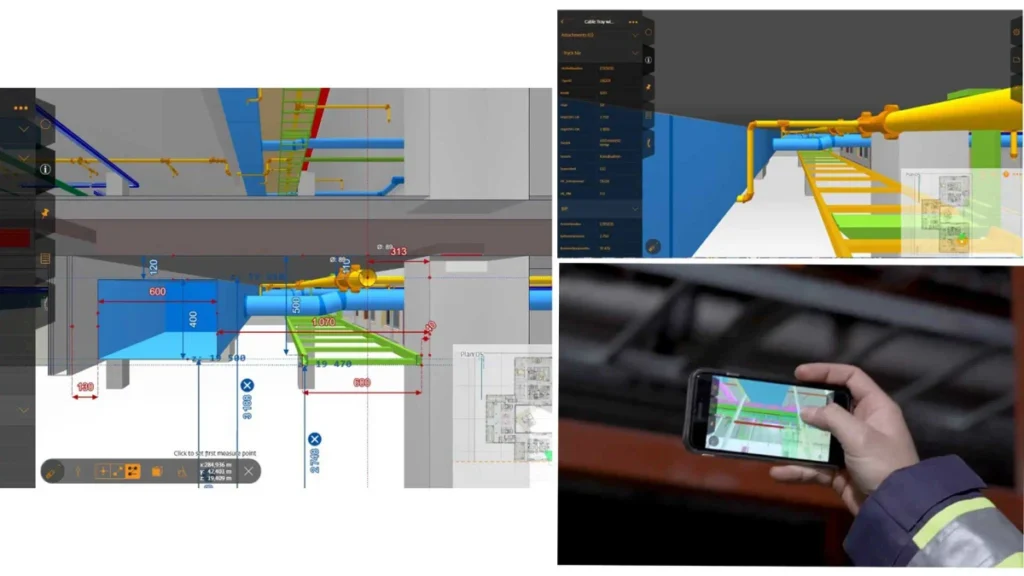
Instead of static, disconnected information sources, Total BIM enables a single connected information environment, accessible on-site through cloud-based platforms and mobile BIM-viewer software. This environment allows information to be continuously updated, filtered, created, and reused by all project participants.
Why Traditional BIM Falls Short
Previous BIM implementations have often struggled due to several recurring issues:
- Parallel delivery of BIM and 2D drawings, leading to inconsistencies
- Loss of trust in BIM when models are no longer updated
- Software designed primarily for expert users rather than site personnel
- Limited on-site hardware access and insufficient training
- Interoperability challenges and unresolved legal frameworks
As a result, construction has traditionally relied on static, unconnected information, even in so-called “BIM projects.” Total BIM addresses these shortcomings by introducing a dynamic, model-based production process.
Total BIM in Practice: Evidence from Case Studies
Research by Chalmers University based on case studies in Sweden, and Norway demonstrates how Total BIM fundamentally changes on-site construction practices.
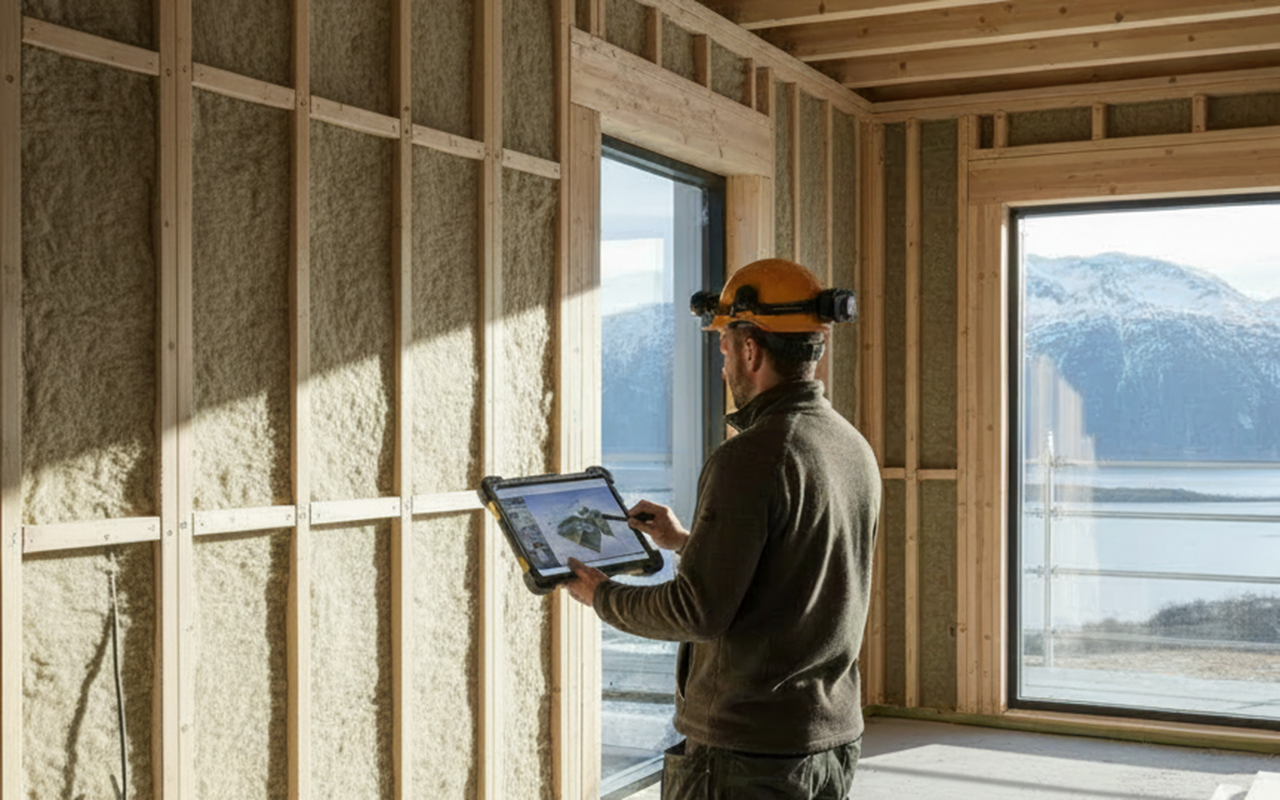
A key finding is that construction workers are no longer passive recipients of drawings. Instead, they become active creators and consumers of digital information. Using modern, user-friendly BIM-viewer software on mobile devices, site workers can:
- Measure directly in the model
- Filter and query relevant information
- Add structured data, photos, and comments linked to BIM objects
- Generate task-specific views rather than relying on predefined drawings
This dynamic interaction transforms BIM from a design artifact into a live production and communication platform.
Integrated Communication and Information Flow
One of the most significant benefits of Total BIM is improved communication. Information that was previously exchanged through emails, phone calls, or isolated documents becomes transparent, traceable, and accessible within the model environment.
In the studied projects, BIM-viewer applications evolved beyond visualization tools into integrated management platforms. Requests for information (RFIs), site photos, measurements, and short descriptions were directly linked to model objects. This reduced handling times, improved situational awareness, and enabled management teams to better monitor construction progress.
Success Factors for Implementing Total BIM
Across the case studies, several common success factors were identified:
- BIM as the legally and contractually binding document
The elimination of drawings removes ambiguity and forces all stakeholders to rely on the same information source. - High-quality, production-oriented BIM
Models must be detailed, structured, and tailored for construction—not just design intent. - Cloud-based model management and mobile access
Real-time access on-site ensures that BIM remains updated, trusted, and relevant. - Powerful yet user-friendly BIM-viewer software
Tools must support non-expert users, enabling measurement, filtering, and information creation. - Strong leadership and management commitment
Successful Total BIM projects require decisive leadership and an “all-in” strategy, rather than partial adoption.
One of the case studies, the award-winning Celsius lab- and office building on the Lund University campus by Swedish developer Vasakronan, exemplifies these factors, finishing on time and approximately SEK 9 million under budget, despite higher initial design efforts to produce detailed BIM data.
Changing Roles and Responsibilities
Total BIM fundamentally alters professional roles within construction projects. Designers must commit to earlier decision-making, while gaining greater influence over final outcomes. Site workers and subcontractors are involved earlier during design stages to ensure constructability and data quality.
In the studied projects, a structured, multi-step quality assurance process involved production personnel directly in model development. This shift changes site workers from recipients of static instructions into contributors to a shared digital knowledge base.
Challenges and Future Implications
While Total BIM has demonstrated significant benefits, challenges remain. New demands are placed on quality assurance, tolerance management, and regulatory frameworks, particularly since BIM becomes the legally binding document. Standards and guidelines will need to evolve to support these new digital practices.
Looking forward, Total BIM lays the foundation for digital twins of construction sites. The integration of checklist data, sensor inputs, and real-time progress monitoring could further empower project managers and construction workers, enabling data-driven decision-making throughout the project lifecycle.
Total BIM as a Catalyst for Digital Construction
Total BIM moves beyond incremental BIM adoption toward a holistic, integrated, and production-focused digital construction methodology. By eliminating drawings, unifying information flows, and empowering on-site personnel, Total BIM addresses long-standing inefficiencies in construction projects.
The research and case studies demonstrate that static 2D drawings are no longer necessary and that BIM can function as a dynamic single source of information across all project phases. While the transition requires strong leadership and a change in mindset, Total BIM may represent the preferred method for future construction—reducing errors, minimizing rework, and unlocking the full value of digital construction.