
Die Einsparungen liegen in den Übergängen zwischen Bauphasen – Wie Total BIM Wert von der Planung bis zum Betrieb schafft
In vielen Bauprojekten sind nicht mangelnde Informationen das Problem. Es ist ein Mangel an gemeinsam genutzten, aktuellen und nutzbaren Informationen, wenn Entscheidungen getroffen werden müssen.
Die neueste Überarbeitung ist an einem Ort. Klärungen sind an einem anderen. O&M-Daten werden oft spät erfasst. Und wenn das Projekt von der Planung zur Produktion, von der Baustelle zur Übergabe und von der Dokumentation zum Betrieb übergeht, gehen Zeit, Qualität und Kontrolle verloren.
Gerade in diesen Übergängen schafft Total BIM Mehrwert.
Wenn das BIM-Modell zur operativen Quelle der Wahrheit wird, werden Informationen aus statischen Zeichnungen, PDFs, E-Mails und manuellen Klärungen herausgenommen und in einen gemeinsamen modellbasierten Workflow überführt. Dann wird BIM mehr als nur ein Entwurfswerkzeug. Es wird zu einer Management-Grundlage für die gesamte Wertschöpfungskette.
Die Einsparungen liegen also nicht nur in geringeren Kosten. Sie liegen in weniger Klärungsrunden, weniger Wartezeiten, weniger in das Design eingebauten Fehlern, weniger Nachbesserungen bei der Übergabe und einer besseren Datenbasis für den Betrieb.
Von Design: Treffen Sie bessere Entscheidungen, bevor Fehler teuer werden
In der Designphase geht es um mehr als nur die Erstellung eines guten Modells. Es geht darum, sicherzustellen, dass das Modell tatsächlich zu einer gemeinsamen Grundlage für Entscheidungen wird.
Wenn Disziplinen auf dieselbe, aktuelle Informationsbasis hinarbeiten, lassen sich die Folgen von Änderungen leichter erkennen, Konflikte aufdecken, Schnittstellen verdeutlichen und das Risiko, Fehler auf die Baustelle zu übertragen, verringern.
Dies ist einer der wichtigsten Vorteile von Total BIM: Die Informationen bleiben nicht isoliert bei den Planern. Sie sind so strukturiert, dass sie von den Verantwortlichen für die Planung, den Bau, die Inspektion, die Übergabe und den Betrieb des Projekts genutzt werden können.
Chalmers’ Forschung zu Total BIM unterstreicht genau diesen Wandel. Der Wert liegt nicht nur im 3D-Modell, sondern darin, wie das Modell Arbeitsabläufe verändert und eine gemeinsame Informationsbasis für das gesamte Projekt schafft.
Zum Erstellen: wenn die Informationen im Feld funktionieren müssen
Für Auftragnehmer und Projektmanager wird BIM erst dann wirklich wertvoll, wenn das Modell auf der Baustelle funktioniert.
Es ist von wenig Nutzen, dass die Informationen existieren, wenn sie während des Baus nicht leicht zu finden, zu verstehen und anzuwenden sind. Wenn die neueste Überarbeitung schwer zu identifizieren ist oder Erläuterungen über E-Mails, Besprechungen und PDFs verstreut sind, steigen das Risiko von Verzögerungen, Missverständnissen und Baufehlern.
In der Praxis laufen Kosteneinsparungen oft auf sehr spezifische Dinge hinaus: die richtigen Informationen schneller finden, die Anzahl der Klärungsrunden reduzieren, vermeiden, dass Arbeiten in der falschen Reihenfolge ausgeführt werden, Abweichungen früher erkennen und mehr Rollen Zugang zur selben Entscheidungsgrundlage geben.
Im Laufe der Zeit haben Skanska und andere Bauunternehmen BIM als Treiber für eine bessere Koordination, eine bessere Sequenzierung und ein geringeres Risiko bei komplexen Projekten hervorgehoben. Oftmals werde hier das Argument für die Baustellenorganisation am konkretesten: weniger Wartezeiten, weniger Fehler und ein besserer Produktionsfluss.
Total BIM dreht sich also nicht darum, noch eine weitere digitale Ebene über das Projekt zu legen. Es geht darum, das Modell zu einer Arbeitsgrundlage zu machen, die dort, wo die Arbeit stattfindet, tatsächlich genutzt wird.
Zur Übergabe: vom Endreinigung bis zur fortlaufenden Lieferung
Übergabe ist einer der am meisten unterschätzten Verlustpunkte in Bauprojekten.
Im Projekt existiert bereits viel Information, diese ist aber oft nicht so strukturiert, dass sie vom Kunden oder dem Betrieb direkt genutzt werden kann. Das Ergebnis ist, dass Dokumentation spät im Prozess zusammengestellt, aufbereitet, geprüft und ergänzt werden muss. Das schafft Doppelspurigkeiten. Es schafft Unsicherheit. Und es untergräbt das Vertrauen in die Datenbasis gerade dann, wenn das Bauwerk in Gebrauch genommen werden soll.
Mit Total BIM wird die Übergabe im Projekt nach vorne verlagert. Informationen werden im Laufe des Projekts mit Objekten, Räumen, Systemen und Verantwortlichkeiten verknüpft. Die Übergabe wird somit nicht zu einer separaten Aufräumaktion am Ende, sondern zu einem laufenden Bestandteil des Informationsflusses des Projekts.
buildingSMART und COBie heben dasselbe Prinzip hervor: Der Wert der digitalen Übergabe liegt in der Strukturierung der Informationen, die tatsächlich für Betrieb, Wartung und Management benötigt werden. Nicht nur mehr Dokumentation liefern, sondern nutzbare Dokumentation liefern.
An FM: wenn Dokumentation zur Arbeitsbasis wird
Für das Betriebsteam ist mangelnde Dokumentation selten das Problem. Das Problem ist, dass die Dokumentation oft nicht mit der tatsächlichen Nutzung des Gebäudes verknüpft ist.
Wo ist die Ausrüstung untergebracht? Um welchen Raum geht es? Welche Komponente ist installiert? Wie ist die Historie? Welche Wartung ist erforderlich? Wer ist dafür verantwortlich? Wann war das letzte Update? Wenn diese Informationen verstreut oder schwer zu verifizieren sind, verliert der Kunde selbst nach Abschluss des Projekts an Wert.
Der größte finanzielle Vorteil eines verbesserten Informationsflusses wird oft über die Lebensdauer des Gebäudes realisiert. Wenn Betriebs- und Managementabteilungen strukturierte, aktuelle und nutzbare Informationen erhalten, wird es einfacher, Wartungsarbeiten zu planen, Abweichungen zu bewältigen, Lieferungen zu verfolgen und auf den Daten aufzubauen.
Die Übergabe ist nicht das Ende des BIM-Prozesses. Sie ist der Beginn einer datengesteuerten Betriebsphase.
Wo das Sparen tatsächlich liegt
Die mit Total BIM erzielten Einsparungen stammen nicht aus einer einzelnen Funktion. Sie ergeben sich aus einer verbesserten Interaktion zwischen Technologie, Informationsstruktur und Arbeitsprozessen.
| Kostentreiber | Was es reduziert | Wo Wert geschaffen wird |
|---|---|---|
|
Eine einzige Quelle der Wahrheit |
Versionsfehler, Doppelarbeit und Unsicherheit |
Design, Bau und Übergabe |
|
Kontrolle und Rückverfolgbarkeit |
Falsche Entscheidungen und unklare Verantwortlichkeiten |
Entwerfen und bauen |
|
Sicherer Informationsfluss |
Fehlerhafter Zugriff, Missbrauch und fragmentierte Informationsweitergabe |
Die gesamte Wertschöpfungskette |
|
Feldübernahme |
Verzögerungen, Missverständnisse und fehlerhafte Bauausführung |
Bauen |
|
Strukturierte Übergabe |
Endreinigung, Auslassungen und schwache O&M-Liefergegenstände |
Übergabe und Facility Management |
|
Datengesteuerte Abläufe |
Manuelle Prozesse, schwache Entscheidungsgrundlage und geringe Datenqualität |
FM und Portfolio |
Das ist auch der Grund, warum Total BIM nicht nur als Digitalisierungsprojekt betrachtet werden sollte. Es stellt eine Veränderung dar, wie Projekte geplant, gebaut, übergeben und betrieben werden.
Vom Modell zur Arbeitsweise
BIM schafft keinen Mehrwert allein durch die Existenz des Modells. Wert wird geschaffen, wenn das Modell von anderen Personen als BIM-Spezialisten genutzt wird.
Wenn Kunden, Berater, Auftragnehmer, Facharbeiter und Betriebsteams alle von derselben aktuellen Informationsbasis aus arbeiten, wird die Lücke zwischen Planung und Produktion reduziert. Zwischen Anforderungen und Lieferung. Zwischen Dokumentation und Betrieb.
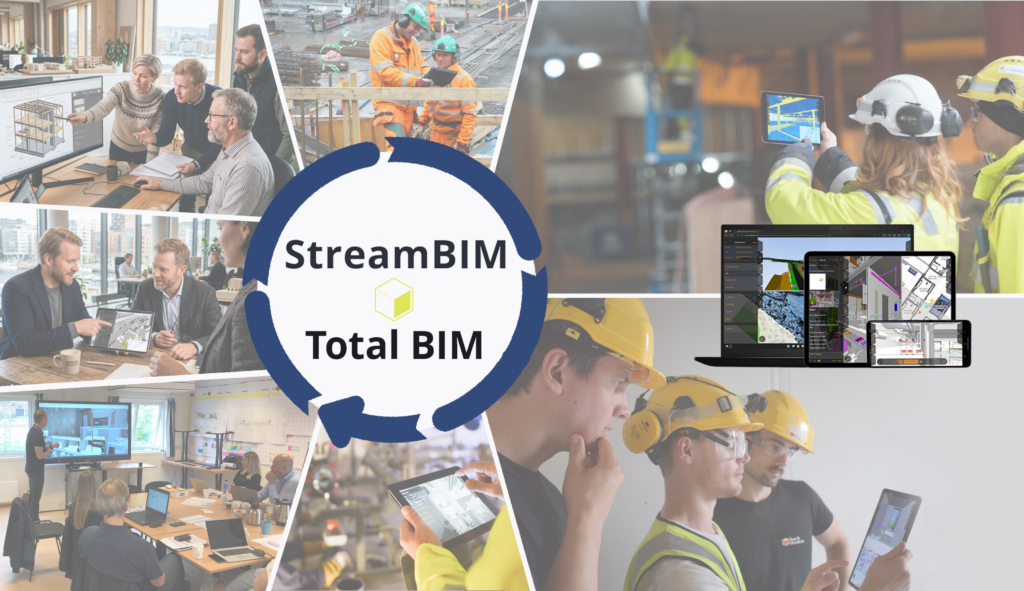
Total BIM in StreamBIM wurde entwickelt, um Folgendes zu unterstützen: das Modell zugänglich, nutzbar und kontrollierbar während des gesamten Arbeitsprozesses zu machen – von der Planung bis zum Betrieb.
Für Organisationen, die Fehler, Wartezeiten, Nacharbeiten und Informationsverluste reduzieren wollen, stellt sich daher nicht einfach die Frage, ob sie “BIM nutzen”.
Die Frage ist, ob BIM tatsächlich Teil ihrer Arbeitsweise geworden ist.
Erst dann bewegt sich Total BIM von der digitalen Ambition zu messbaren Auswirkungen.